GradeThisDeal

Blog & insights

Practical, no-jargon articles on valuing, financing and de-risking business acquisitions — calibrated to the markets GradeThisDeal covers.

Deal Reviews · Featured

Deal review: a $1.3M car-hauling business at 3.25x SDE

We scored a real BizBuySell logistics listing — $400K cash flow, fully remote, $1.3M asking — with the GradeThisDeal engine. Verdict: 65/100, priced almost exactly at fair value. Here is what the score can and cannot tell you.

6 min read

Deal Reviews — editorial cover illustration, GradeThisDeal blog
Deal Reviews

Deal review: a SaaS at 1.4x profit — bargain or trap?

A real Flippa listing: $147K revenue, 96% margins, 475 subscribers, asking $200K — about 1.4x profit when comparable SaaS trades at 2.5-4.5x. We scored it 77/100 with the GradeThisDeal engine and unpack why "too cheap" is itself the thing to diligence.

Jun 11, 20266 min read
Finance basics — editorial cover illustration, GradeThisDeal blog
Finance basics

What is EBT (earnings before tax)?

EBT is earnings before tax — a company's profit after interest but before income tax. Here is the formula, why it matters for comparing companies, and a worked example.

Jun 9, 20264 min read
Finance basics — editorial cover illustration, GradeThisDeal blog
Finance basics

What is SDE (seller's discretionary earnings)?

SDE is the total financial benefit one working owner takes from a business — the earnings basis nearly every Main Street sale is priced on. Definition, formula, a worked example, and the add-backs buyers push back on.

Jun 9, 20265 min read
Finance basics — editorial cover illustration, GradeThisDeal blog
Finance basics

What is free cash flow (FCF)? Formula and example

Free cash flow is the cash a business has left after paying its operating costs and capital expenditure — the cash actually available to investors and lenders. Here is the formula, levered vs unlevered FCF, and a worked example.

Jun 9, 20265 min read
Finance basics — editorial cover illustration, GradeThisDeal blog
Finance basics

What is EBIT? (and how it differs from EBITDA)

EBIT is earnings before interest and taxes — a company's operating profit. Here is the formula, the difference between EBIT and EBITDA, a worked example, and when each is used.

Jun 9, 20264 min read
Finance basics — editorial cover illustration, GradeThisDeal blog
Finance basics

What is EBITDA? Definition, formula and a worked example

EBITDA is operating profit with interest, taxes, depreciation and amortisation added back — the standard yardstick for comparing businesses. Definition, formula, a worked example, and the two places it misleads small-business buyers.

Jun 9, 20265 min read
Valuation — editorial cover illustration, GradeThisDeal blog
Valuation

Customer concentration: the hidden risk that cuts your multiple

When one customer is 30% of revenue, the business is worth meaningfully less — buyers and lenders price that risk directly. Where the thresholds sit, how the discount works, and the deal structures that bridge it.

Jun 9, 20265 min read
Method — editorial cover illustration, GradeThisDeal blog
Method

How GradeThisDeal scores a deal: the methodology

A transparent walkthrough of the 0-100 score — the four dimensions, the verdict bands, and how price, cash flow and risk combine into one grade calibrated to each market.

Jun 9, 20267 min read
Method — editorial cover illustration, GradeThisDeal blog
Method

Enterprise value vs equity value: the net-debt bridge

The asking price is for the equity, but multiples are quoted on enterprise value. Here is the bridge between them — net debt and working capital — and why it changes the deal.

Jun 9, 20265 min read
Due Diligence — editorial cover illustration, GradeThisDeal blog
Due Diligence

Owner dependence: will the business run without the seller?

If the business can't run without the seller, part of what you're buying walks out at closing. How buyers detect owner dependence, what it does to the multiple, and the 96%-margin listing that shows the trap perfectly.

Jun 9, 20265 min read
Method — editorial cover illustration, GradeThisDeal blog
Method

What your deal score and verdict mean

How to read the verdict bands, the dimension bars, the valuation range and the Monte-Carlo distribution — and what to actually do with them.

Jun 9, 20266 min read
Method — editorial cover illustration, GradeThisDeal blog
Method

How to use the GradeThisDeal calculator

A step-by-step walkthrough: which numbers to enter, when to mark something unknown, choosing SDE vs EBITDA, and how to read the result.

Jun 9, 20266 min read
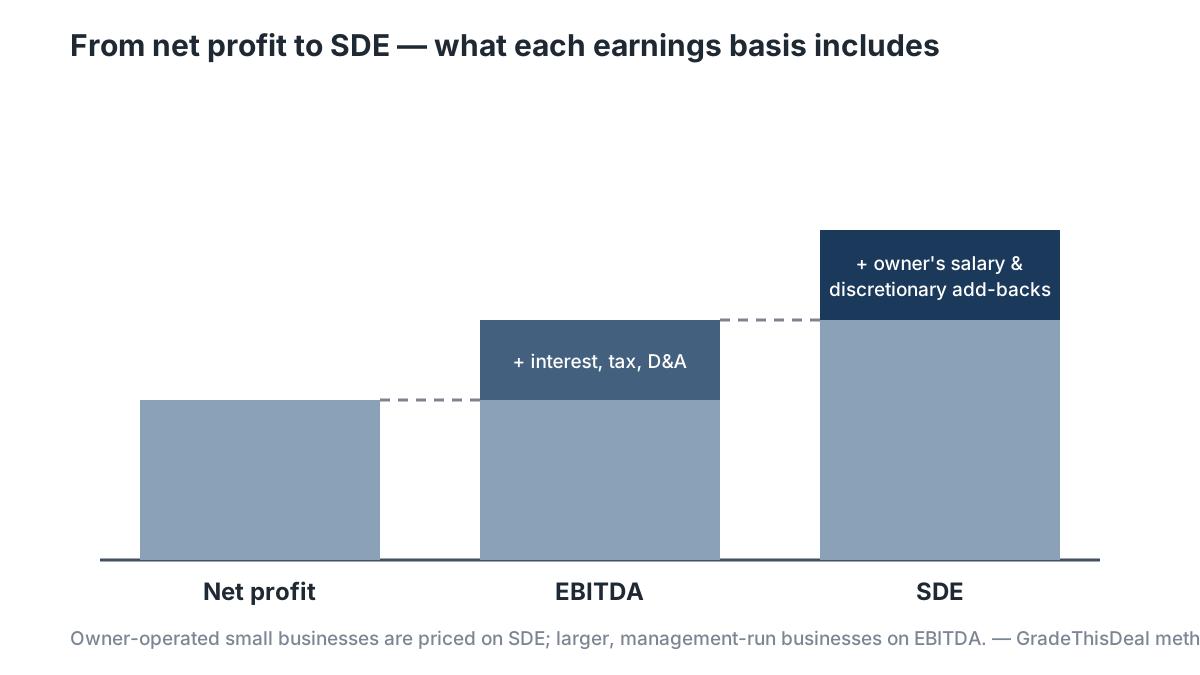
Diagram: net profit plus interest, tax and D&A equals EBITDA; EBITDA plus the owner's salary and discretionary add-backs equals SDE
Valuation

SDE vs EBITDA: which earnings number should you value on?

Use SDE when the owner runs the business; use EBITDA when a management team does. Get the basis wrong and the same company's "fair price" moves by 30% or more — as a real Flippa listing with 96% margins shows.

Jun 8, 20266 min read
Due Diligence — editorial cover illustration, GradeThisDeal blog
Due Diligence

The business-acquisition due-diligence checklist

The diligence checklist working buyers actually run: financial, customer, operational, legal/regulatory and deal-structure checks, ordered by what kills deals most often — with the verification step for every claim a listing makes.

Jun 8, 20266 min read
Valuation — editorial cover illustration, GradeThisDeal blog
Valuation

What is my business worth? A practical guide

Most owner-operated businesses are worth a multiple of their seller's discretionary earnings — across 9,586 US sales in 2025 the average was 2.61x cash flow. Here is the working buyer's method, with real market data and a worked example.

Jun 8, 20266 min read
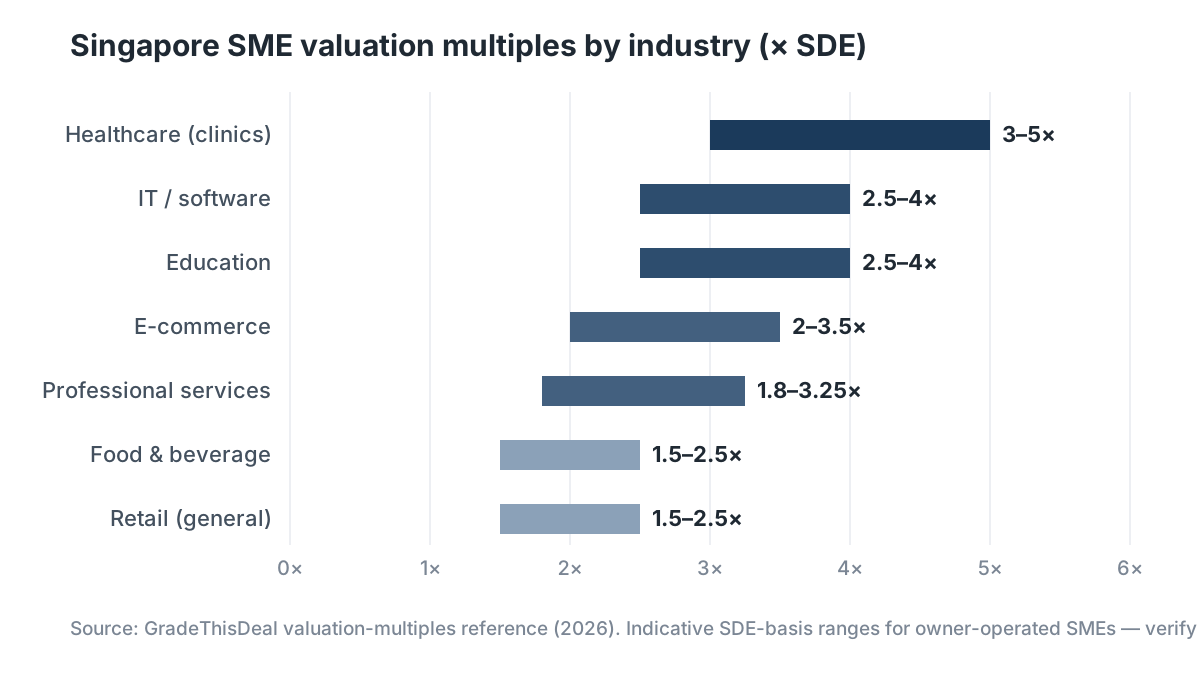
Chart: Singapore SME valuation multiples by industry — healthcare 3–5× SDE, IT/software and education 2.5–4×, e-commerce 2–3.5×, professional services 1.8–3.25×, F&B and retail 1.5–2.5×
Valuation

Business valuation multiples by industry

Industry is the single biggest driver of what a business sells for: US Main Street averages 2.7x cash flow, smaller SaaS trades at 2.5-4.5x, and Singapore SME bands run 1.5-5x SDE by sector. The full reference, with sources and the reasons behind the spread.

Jun 8, 20266 min read
Valuation — editorial cover illustration, GradeThisDeal blog
Valuation

How to value a restaurant or F&B business

Restaurants sell on SDE multiples, and the band is unforgiving: roughly 1.5-2.5x in Singapore. Rent ratio, lease runway, chef dependence and concept transferability decide where in the band a specific outlet lands. The working method, with a worked example.

Jun 8, 20266 min read
Singapore — editorial cover illustration, GradeThisDeal blog
Singapore

Singapore's Dependency Ratio Ceiling, explained for buyers

If you are buying a Singapore business that relies on foreign workers, the DRC can quietly cap how many you can keep. Here is what to check before you sign.

Jun 8, 20265 min read
Method — editorial cover illustration, GradeThisDeal blog
Method

Reading a Monte Carlo fair-value range

A single valuation number hides the risk. A distribution shows it. Here is how to read P10/P50/P90 and the probability the asking price is fair.

Jun 8, 20264 min read
Financing — editorial cover illustration, GradeThisDeal blog
Financing

DSCR explained: the number lenders care about most

DSCR — cash flow divided by annual debt service — is the number that decides whether a deal can be financed at its asking price. Where lenders draw the line (1.25x floor, 1.5x comfort), the formula, and a real listing scored at 2.07x.

Jun 8, 20265 min read
Financing — editorial cover illustration, GradeThisDeal blog
Financing

SBA 7(a) vs conventional financing for US acquisitions

The SBA 7(a) loan is the workhorse of US small-business acquisitions. Here is when it beats a conventional loan, and the eligibility gate that trips buyers up.

Jun 8, 20265 min read
Valuation — editorial cover illustration, GradeThisDeal blog
Valuation

How to value a small business with EBITDA multiples

The five-step EBITDA-multiple method buyers actually use: normalise earnings, pick the band, adjust for quality, bridge to equity value, sanity-check with financing — with a worked example and current market multiples.

Jun 8, 20266 min read