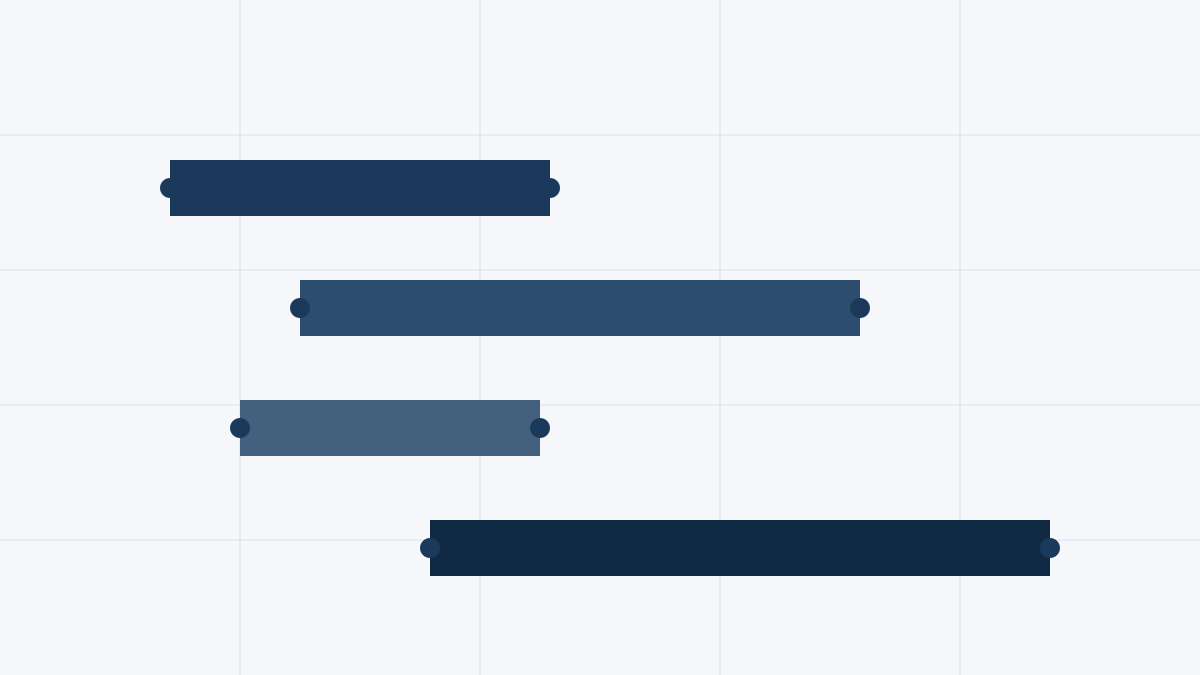
A restaurant or F&B business is typically worth 1.5×–2.5× its seller's discretionary earnings (SDE) in Singapore — among the lowest multiple bands of any industry — because walk-in revenue, lease dependence and key-person cooking skill make F&B earnings the hardest kind to transfer. The craft of valuing one is knowing what pushes a specific outlet toward 1.5× or toward 2.5×.
(The band above is from GradeThisDeal's Singapore F&B reference, SDE-basis, mapped to SSIC 2025 codes with a last-verified date. US buyers: Main Street restaurant deals also clear below the all-industry 2.7× average.)
Start with honest SDE — F&B's add-backs hide in the kitchen
SDE = net profit + one owner's salary + genuinely one-off costs. F&B sellers commonly over-add: family members on the payroll who actually work shifts, "one-off" repairs that recur every 18 months, supplier rebates booked as income. Rebuild SDE from POS data and bank statements, not the seller's spreadsheet.
Worked example — a 60-seat casual restaurant:
| Line | Amount |
|---|---|
| Revenue | S$1,400,000 |
| Net profit | S$120,000 |
| + Owner-chef salary | S$78,000 |
| + One-off kitchen flood repair | S$22,000 |
| SDE | S$220,000 |
| Band (1.5–2.5×) | S$330K–S$550K |
A S$220K spread inside one band — the quality factors below are where the money is.
The five factors that place a restaurant in its band
- Rent ratio. Occupancy cost above ~15% of revenue caps profitability forever; under 10% in a comparable location earns a premium.
- Lease runway and renewal terms. A 14-month lease with no renewal option can halve a valuation — buyers price the risk that the landlord, not the seller, captures the goodwill. The engine flags short runway explicitly.
- Chef dependence. If the owner-chef is the food, SDE includes a salary you must spend twice — once to the seller at closing, once to a head chef forever. (Owner dependence.)
- Concept transferability. Licences (liquor, halal certification), franchise terms, and recipes that exist only in someone's head all decide how much earning power actually conveys.
- Format. Hawker stalls, bubble-tea/QSR units and full-service restaurants trade differently — Singapore's reference splits them into their own subsector bands.
From GradeThisDeal's Singapore reference (2026): cafés and restaurants trade at roughly 1.5×–2.5× SDE, with quick-service and kiosk formats often changing hands near asset value when earnings are thin.
Sanity checks that catch bad F&B deals
- Asset floor: thin-margin outlets often sell for fit-out + equipment value, not an earnings multiple at all. If 1.5× SDE is below the orderly asset value, the assets set the price.
- Financing reality: at typical leverage the deal must cover debt service ~1.5× (DSCR explained); marginal cash flow fails this fast.
- Staffing quotas (Singapore): service-sector foreign-worker ratios bind hard in F&B — a buyer who can't replicate the seller's crew can't replicate the earnings. (Dependency Ratio Ceiling, explained.)
Score a specific outlet
The free calculator applies the right F&B subsector band, the quality adjustments and the financing math in about two minutes — and shows a fair-value range with a Monte-Carlo distribution rather than one false-precision number.
Screening reference, not a formal valuation. Bands carry last-verified dates — verify before relying on a figure.