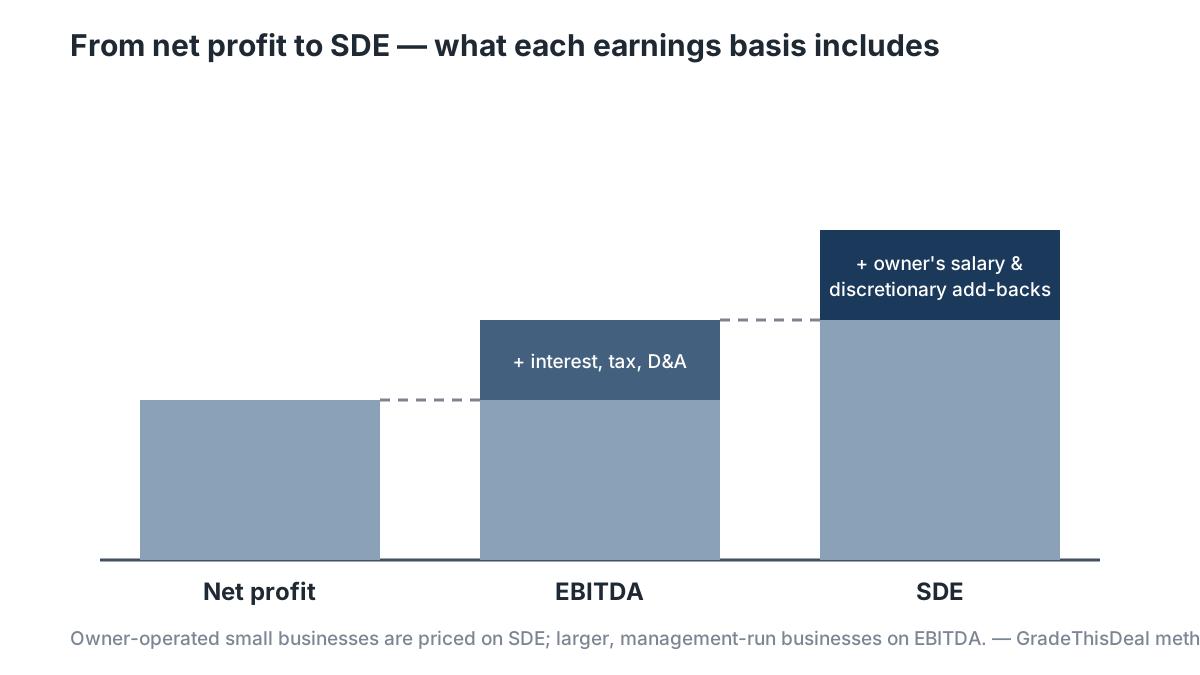
Use SDE when you're valuing an owner-operated business; use EBITDA when the business runs on a salaried management team. The dividing line in practice sits around $700K–$1M of earnings: below it, buyers are buying themselves a job plus a return and price on SDE; above it, buyers are buying a self-running asset and price on EBITDA. Quote the wrong basis and the same company's "fair price" can move 30% or more.
The two numbers, side by side
| SDE | EBITDA | |
|---|---|---|
| Stands for | Seller's discretionary earnings | Earnings before interest, taxes, depreciation & amortisation |
| Includes owner's pay? | Yes — added back | No — a market-rate manager's salary stays as a cost |
| Who it's for | Owner-operators, Main Street deals | Management-run companies, lower-middle-market and up |
| Typical multiple scale | ~1.5–4× (US average 2.7×) | Higher — the base is smaller because a manager is paid |
The bridge between them is one line: SDE = EBITDA + one owner's market-rate compensation (plus genuinely discretionary expenses). Our cover chart shows the full walk from net profit.
Why the basis changes the price
A business with $300K EBITDA where the owner would cost $100K to replace has $400K SDE. At "3×" those produce $900K and $1.2M — same company, 33% apart, purely from which basis the 3× was quoted against. Every multiple you read is meaningless until you know its basis. (Our industry reference is SDE-basis throughout and says so on every page; the methodology explains how the engine shifts bands when bases differ.)
A live example of the trap
In our review of a real Flippa SaaS listing, the seller advertises $11.8K monthly profit at a 96% margin. A margin that high means the founder personally does support, sales and content — unpaid. The listing's "profit" is therefore SDE in all but name. A buyer who needs to hire $40K of replacement labour is really buying ~$100K of EBITDA, and the advertised 1.4× multiple is closer to 2× on the honest basis. Same listing, same dollars — different basis, different deal.
The reverse error is just as costly for sellers: pricing an owner-run café on an EBITDA band found in a private-equity newsletter produces an asking price the actual F&B market at 1.5–2.5× SDE will never pay.
Three rules that prevent 90% of basis errors
- Ask "does this multiple's source include the owner's salary?" before using any benchmark. BizBuySell's published multiples are cash-flow (SDE) basis; most institutional comps are EBITDA.
- Add back only one owner. Two working spouses on the payroll means one market-rate salary must stay in costs.
- At scale, switch. Once earnings clear ~$1M and a GM is genuinely in place, SDE flatters the seller — buyers at that size will quietly re-cut your number to EBITDA anyway.
The free calculator asks for your earnings basis explicitly and adjusts the band rather than letting the two get mixed — enter the same deal both ways and you can see the spread for yourself.
Related: What is EBITDA? · What is SDE? · What is my business worth?