Business valuation multiples vary more by industry than by any other factor. As of Q1 2026, the average US small business sells for 2.7× cash flow (BizBuySell Insight Report) — but that average hides a spread from under 2× for undifferentiated retail to 4.5×+ for healthcare and software. Pricing a business with the wrong industry's multiple is the single most common valuation error we see.
Why industry moves the multiple
A multiple is compressed risk math. Industries command higher multiples when their earnings are more likely to survive an ownership change:
- Revenue stickiness — subscriptions and contracted revenue (software, healthcare) beat walk-in trade (F&B, retail).
- Transferability — licences, key-person skill and regulatory quotas decide how much of the cash flow actually conveys to a buyer. This is why the GradeThisDeal engine prices market-specific rules, not just financials.
- Buyer pool and financing — sectors lenders like (home services, logistics) clear at fuller prices because more buyers can raise the money. (SBA 7(a) vs conventional.)
Current reference points, with sources
| Segment | Multiple | Source |
|---|---|---|
| US Main Street (all industries, avg) | 2.7× cash flow | BizBuySell Insight Q1 2026 |
| US full-year 2025 (9,586 sales) | 2.61× cash flow / 0.69× revenue | BizBuySell 2025 review |
| Smaller SaaS (marketplace listings) | 2.5–4.5× profit | Flippa 2026 SaaS data |
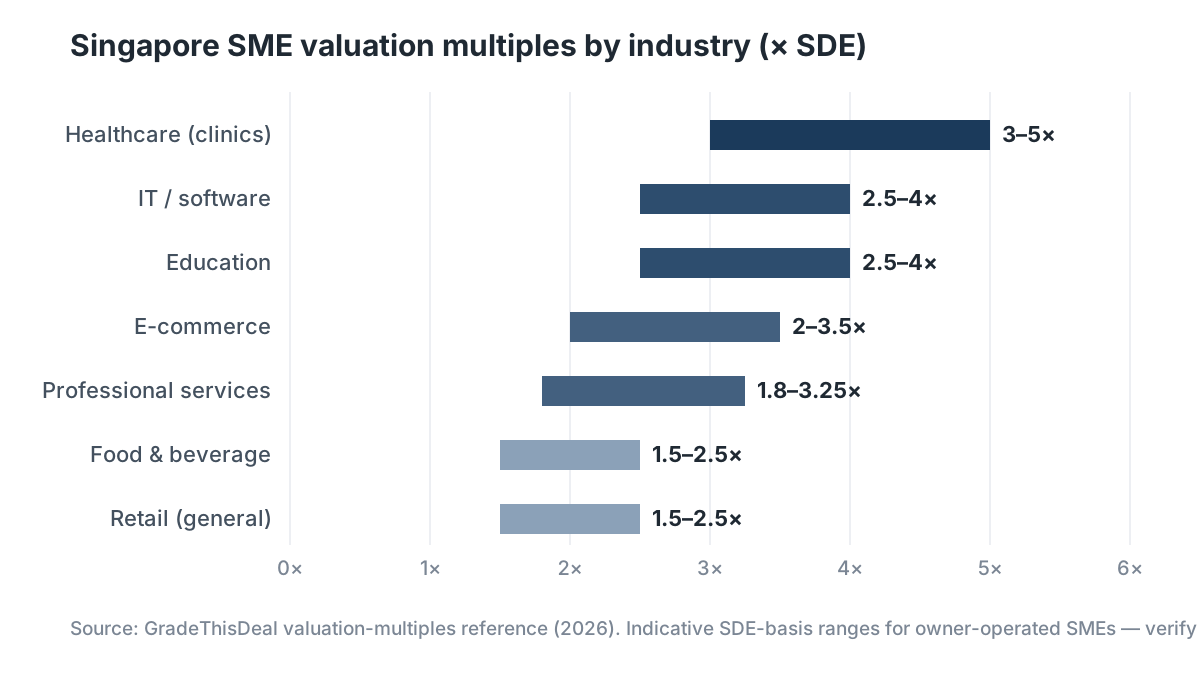
| Singapore F&B (cafés/restaurants) | 1.5–2.5× SDE | GradeThisDeal SG reference |
| Singapore e-commerce | 2–3.5× SDE | GradeThisDeal SG reference |
| Singapore IT / software | 2.5–4× SDE | GradeThisDeal SG reference |
| Singapore healthcare (clinics) | 3–5× SDE | GradeThisDeal SG reference |
The Singapore bands are SDE-basis, mapped to ACRA's SSIC 2025 sector codes, and each carries a last-verified date — the full table covers ~110 subsectors. Subsectors with no public Singapore comp are explicitly flagged "(est.)" rather than dressed up as data.
According to GradeThisDeal's Singapore valuation-multiples reference (2026), most owner-operated SMEs sell for 1.5×–4× SDE, with healthcare at the top of the range and food & beverage at the bottom.
Reading a band like a buyer
Within any band, three questions place a specific business:
- Where does the earnings quality sit? Recurring revenue, diversified customers, owner-independent operations and clean books push toward the top — the engine prices these as a multiplier on the multiple itself (methodology).
- Is the basis right? Bands above are mostly SDE for owner-operated businesses; quoting an EBITDA band against an SDE number inflates value badly (SDE vs EBITDA).
- Does cheap mean broken? A listing far below band is information, not luck — see our review of a SaaS asking 1.4× profit when its marketplace pays 2.5–4.5×.
Apply it to a real deal
Pick your industry's page from the multiples reference, then run the actual numbers through the free calculator — it applies the right band, basis, quality adjustments and financing math for your market, and shows a fair-value range instead of a single fragile number.
Reference bands are screening figures with last-verified dates, not formal valuations. Verify against primary sources before relying on any figure.